Building the Danish Textile Circular System – From Collection and Sorting to Extended Producer Responsibility
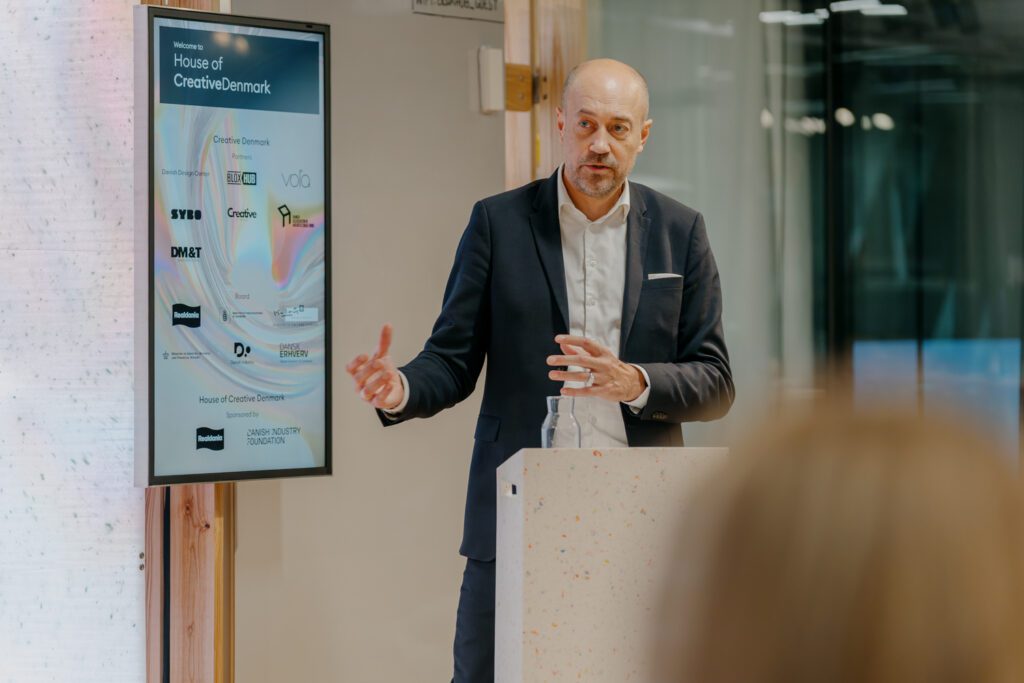
On 2 December, Global Fashion Agenda and Dansk Mode & Textil hosted the policy event “Building the Danish Circular Textile System – From Collection and Sorting to Extended Producer Responsibility” in Copenhagen. The day opened with a visit to UFF-Humana Denmark’s sorting centre, offering a practical look at Denmark’s two-stream collection system and how it contributes to advancing circularity across Europe.
The event convened brands, recyclers, industry associations, and policymakers, including Eric Mamer, Director-General of DG Environment, and Magnus Heunicke, Danish Minister for the Environment and Gender Equality, to discuss how to optimise feedstock flows, scale textile-to-textile recycling, and strengthen cross-sector collaboration in Europe.
Speakers also included Thomas Tochtermann, Chairman of the Board at GFA; Henrik Sand, Sustainability Lead at BESTSELLER; Marie Busck, Chief Sustainability Officer at Danish Fashion & Textile; Rikke Bech, CEO at NewRetex A/S; Robert van de Kerkhof, CEO at ReHubs; Evan Wiener, Advisor to CEO and Board at ReHubs; Thomas Klausen, Vice Chairman, GFA, CEO at Danish Fashion & Textile, and Justin Pariag, Chief Sustainability Officer, GFA.
Speakers reflected on Denmark’s early adoption of mandatory textile collection and its broader ambition to create a model for circular textiles that could inspire EU-wide approaches. However, they also emphasised that even strong national systems have limits without coordinated European action.
Minister Magnus Heunicke emphasised that the current system is still far from sustainable and noted Denmark’s commitment to improving circularity through national planning and upcoming policy measures. However, he stressed that national action alone cannot fix systemic issues. Ensuring that textiles last longer, remain in circulation and reach high-quality recycling will depend on coordinated efforts across Europe, not solely on Danish initiatives.
Speakers also addressed the growing risk of fragmentation as EU Member States begin to implement new requirements under the Waste Framework Directive and the upcoming Extended Producer Responsibility (EPR) schemes. Representatives from companies and industry bodies explained that inconsistent national rules and fee structures can limit efficiency, increase administrative burdens, and complicate planning for recycling investments.
From the European Commission, Eric Mamer acknowledged the challenges posed by fragmentation and noted that progress will require a balanced approach that recognises both the diversity of national systems and the importance of broader regional alignment. The forthcoming Circular Economy Act and Environmental Omnibus were highlighted as important opportunities to improve regulatory coherence, clarify EPR design features, and provide the predictability needed for industry investment.
Across the day, speakers consistently returned to four shared challenges and opportunities that will shape the future of circular textiles in Europe:
The event underscored a shared message: Denmark’s experience provides valuable practical learnings, but building a truly circular textile system will require consistent frameworks, predictable policy conditions, and substantial investment across Europe. Global Fashion Agenda will continue engaging with policymakers, industry partners, and initiatives such as ReHubs to accelerate progress and support the development of a resilient, circular textile value chain.

How the ‘words’ fashion uses shape what we desire, and what we keep.

Next Gen Assembly 2025 Member Elise Dauterive analyzes current EPR frameworks.

Explore GFA's highlights from 2025