Reframing the Business Case for Circularity

By Megan Doyle, Journalist
For years, the fashion industry has been sifting through a great jumble of keys in the hopes of finding the one that will unlock true systemic change towards a more sustainable future. Would citizen activism, with its moral imperative, inspire the change? Would legislation be the key that unlocked fashion’s transformation? Or would it be the consumer, with their desire to purchase more consciously, that would open the door to a more transparent, fair system?
Undoubtedly, these movements have built momentum and drawn attention to the vast array of challenges and improvements ahead. But action hasn’t happened as quickly, or as drastically, as needed. Global Fashion Agenda’s latest report, the Fashion CFO Agenda, uncovers that perhaps the greatest agents of change are those that decide how and where funding flows to enable the solution scaling necessary: the CFO.
The responsibility and power of the CFO has never been so clear. Long gone is time for discussion on what and how fashion needs to change. The industry has abundant solutions—innovators, manufacturers, and academics produce thousands of these a year—but what is lacking is executive attention and ambition. BCG analysis shows a significant reduction, as much as 44% for the issue of corporate governance, in executive coverage of sustainability in earnings calls between 2022 and 2025.
Understandably, global tariffs and trade restrictions, AI, and geopolitics have captured the focus of the C-Suite, distracting them from longer-term, existential threats posed by the climate crisis. But these issues are all interlinked— environmental and social implications are inherent to all major challenges facing the industry, if only we look at them through this lens.
The cost of inaction is no longer just a distant hypothetical threat. By 2030, Europe’s Extended Producer Responsibility (EPR) systems will be in place, hitting mass market brands that have revenues between USD5 to USD10 billion annually with fees as high as USD60 million each year. As EPR rolls out to more regions in the coming years, global fashion producers can no longer ignore the necessary costs of establishing a circular economy for textiles.
Beyond compliance with a suite of incoming laws, CFOs will continue to face costs associated with environmental and social issues linked to the climate crisis. This includes rising raw material costs linked to high demand and low supply of fragile fibres like cotton and wool, and extreme heat and flooding impacting the wellbeing of workers and productivity of suppliers in key manufacturing regions like India and Bangladesh. These risks to fashion’s future are already creating unignorable instability for everyone in the supply chain.
CFOs are used to pulling different financial levers to manage the fluctuating costs of doing business—from rising material and shipping costs to tariffs and compliance. But what if we focused on the opportunities for growth and increased business resilience that the investment in sustainability can bring?
Ambitious CFOs that integrate sustainability into core business decisions can, in collaboration with sustainability and product teams, look to circular systems for growth opportunities. Adopting resale, rental, eco-design techniques, and next-gen and recycled materials can unlock new revenue streams, reduce environmental harm by producing fewer or lower-impact products, and contribute towards achieving climate targets.
Across the spectrum, fashion brands are integrating circularity into their core business and financial strategies, from the high end to the high street. Miu Miu Upcycled, first launched in 2020, reimagines one-off vintage pieces in the brand’s unique aesthetic identity. The initiative makes perfect sense for Miu Miu’s market segment: embracing the luxury sector’s penchant for scarcity and handcraft through a circular system, while creating a revenue stream that doesn’t rely on the production of new clothes.
On the high street, H&M Group has approached circularity through financial investment into companies like secondhand platform Sellpy, of which it became the majority owner in 2019. In just a few years, Sellpy’s turnover—and H&M’s share turnover from resale—doubled. The investment is part of the H&M Group’s New Growth and Ventures investment portfolio, which also includes circular businesses like textile-to-textile recycler Syre, and Looper Textile that collects and sorts textile waste for reuse.
Alongside this, a suite of dedicated circular fashion businesses have emerged in the last decade, embracing growing consumer appetite for new ways to engage with fashion. One of the UK’s largest rental platforms, HURR, has partnered with a number of brands and retailers like Net-a-Porter, Ganni, Selfridges, and Mulberry as a white-labeled rental outlet. HURR and its contemporaries present exciting opportunities for established fashion brands to invest and scale their impact beyond their own product assortment, while plugging into a wider variety of circularity options on the market, such as rental.
These are just a few examples of approaches that fashion brands can take to adopt circularity to their business structures. As the Fashion CFO Agenda explores, each brand’s approach will depend on a number of factors, including maturity level and ambition. Encouragingly, there are a number of solutions and financial mechanisms that CFOs can adopt to begin this process, starting with internally focused risk mitigation and expanding towards externally leading system transformation.
The business case is clear, and the financial frameworks exist to support CFOs in this process. CFOs have the potential to bring sustainability back to the top of the priority list by not only recognising the costs on the horizon, but also the immense opportunities for growth through circularity.
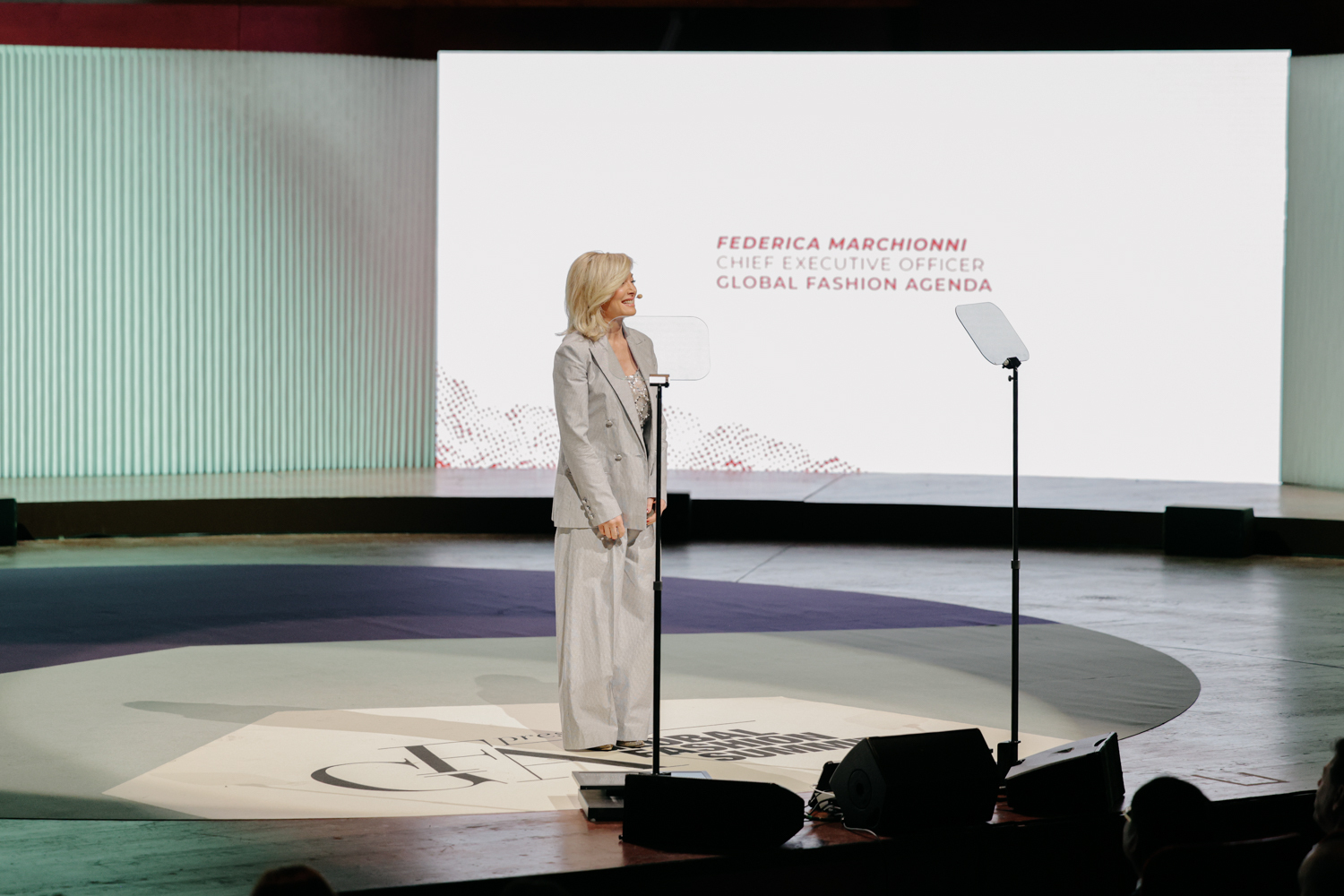
Opening the Summit, Federica Marchionni, CEO, Global Fashion Agenda, called on industry leaders to recognise resilience not as stability, but as the ability to adapt, collaborate, and act amid disruption.
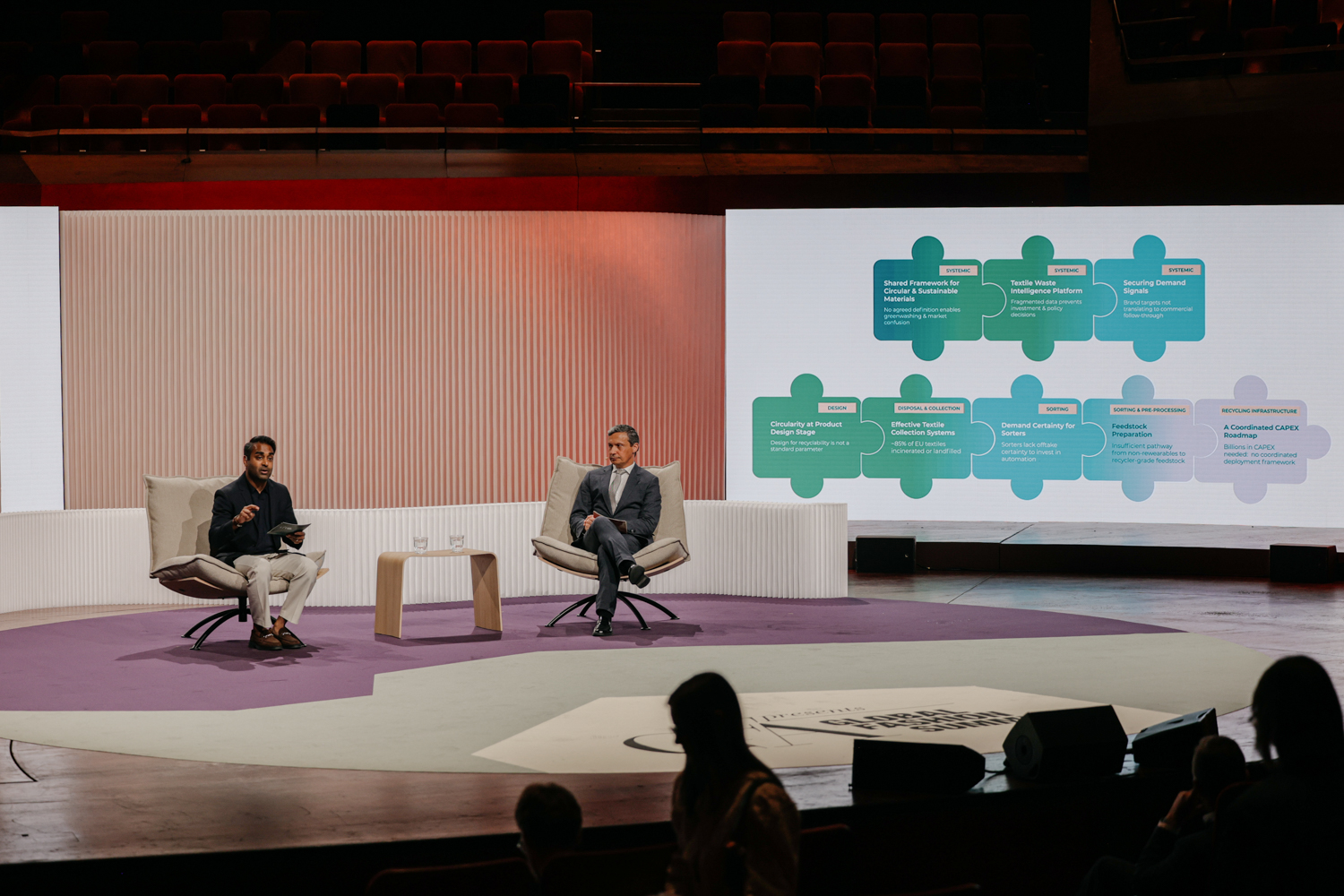
From 5-7 May, Global Fashion Summit: Copenhagen Edition 2026 convened over stakeholders from brands, retailers, NGOs, policymakers, manufacturers, innovators, and adjacent industries to advance collective action.

Global Fashion Agenda (GFA) and PDS Ventures have revealed Synflux as the winner of the Trailblazer Programme 2026.