Policy at Global Fashion Summit 2026
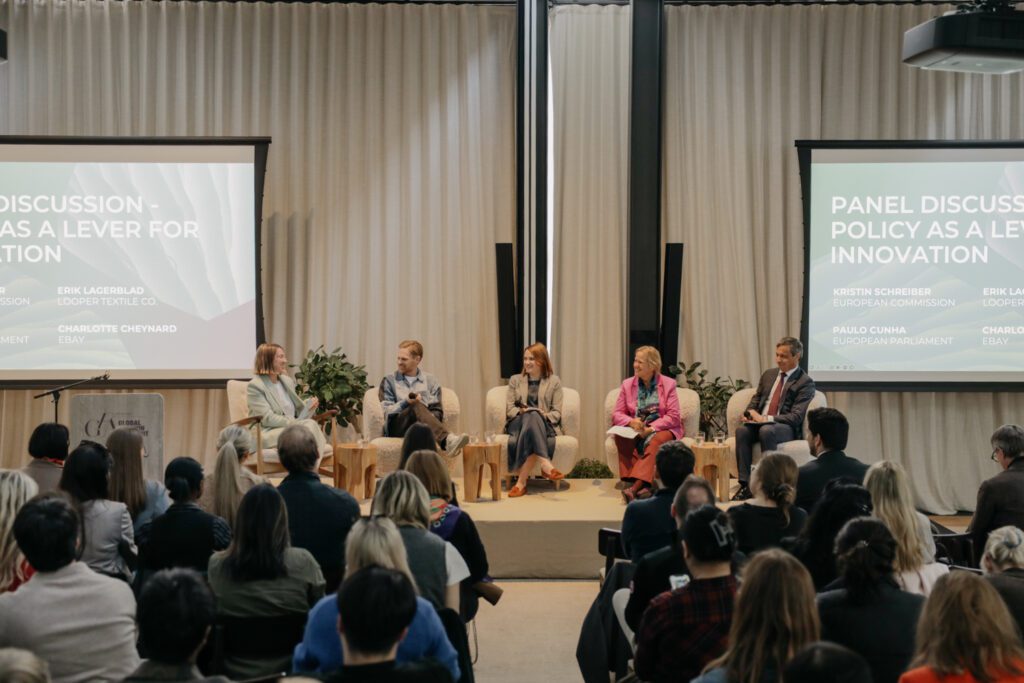
From 5-7 May, the Global Fashion Summit: Copenhagen Edition 2026 brought together industry leaders, policymakers, and sustainability experts for a series of timely conversations on building a more circular and equitable fashion system.
Policymakers including Member of the European Parliament, Paulo Cunha and European Commission representative, Kristin Schreiber joined sessions centred on the shifting policy landscape and the practical steps needed to scale circular business models.
Open Content Sessions
Policy Masterclass: Building Resilient Legislation
Opened by Federica Marchionni, CEO, Global Fashion Agenda, the pre-Summit Policy Masterclass examined the evolving regulatory landscape across key global markets. María Luisa Martínez Díez, VP Public Affairs, Global Fashion Agenda offered insights into EU implementation trends, while Michelle Gabriel, Lecturer, Columbia University and Yale University, reviewed policy developments in the United States. Perspectives from Asia were contributed by H.E. Manish Prabhat, Ambassador of India to Denmark and H.E. Siti Nugraha Mauludiah, Ambassador of Indonesia to Denmark.
The session concluded with a panel discussion on how policy can shape innovation and create the conditions needed to scale circular solutions.
Key takeaways from the panel:
Is Policy Still a Lever for Impact?
Moderated by Bella Webb, Sustainability Editor, Vogue Business, this session brought together Andreas Rasche, Professor, Copenhagen Business School, Kristin Schreiber, European Commission representative, and Wendy Savage, Senior Director, Social Impact & Transparency, Patagonia, to debate whether policy can still drive meaningful impact while balancing sustainability with economic resilience.
Key takeaways:
The EPR Push: Managing Textile Waste
Moderated by María Luisa Martínez Díez, VP Public Affairs, Global Fashion Agenda, with contributions from Paul Doertenbach, Head of Landbell Textile EPR Programme, Landbell Group, Mauro Scalia, Director Sustainable Businesses, EURATEX, and Marie Busck, Chief Sustainability Officer, Dansk Mode & Textil, this session explored EPR compliance, harmonisation, and lessons drawn from other sectors.
Key takeaways:
Roundtables
Alongside the open programme, the Summit hosted a curated series of closed-door roundtables designed to deepen industry collaboration and advance key policy discussions. These included Incentives for Circular Textiles, Walking the Green Talk Through the Labelling Maze, and the Global Textiles Policy Forum.

The Fashion CFO Agenda highlights how CFOs can bring sustainability back to the top of the priority list by recognising rising environmental and social costs while recognising opportunities for growth through circularity.
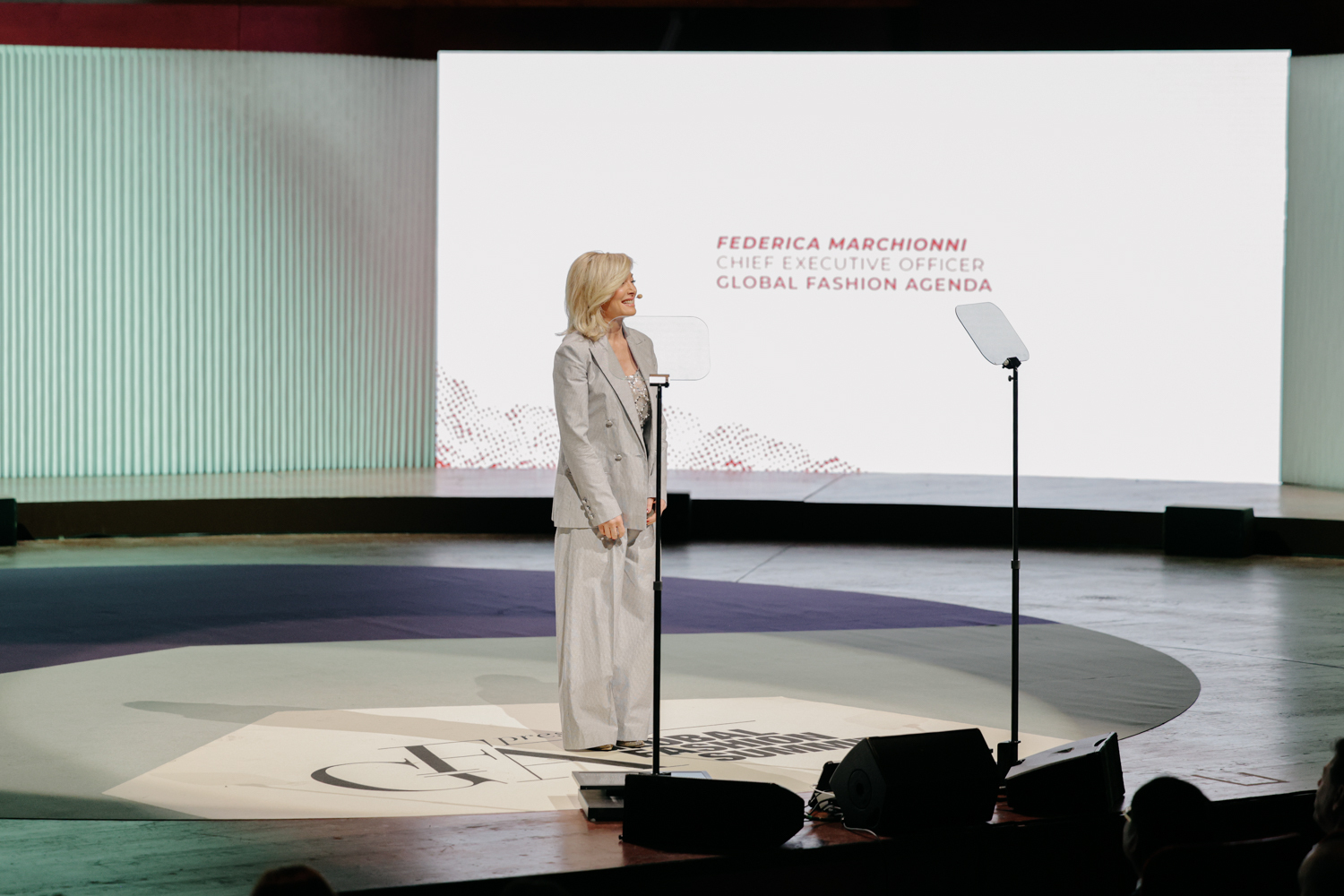
Opening the Summit, Federica Marchionni, CEO, Global Fashion Agenda, called on industry leaders to recognise resilience not as stability, but as the ability to adapt, collaborate, and act amid disruption.
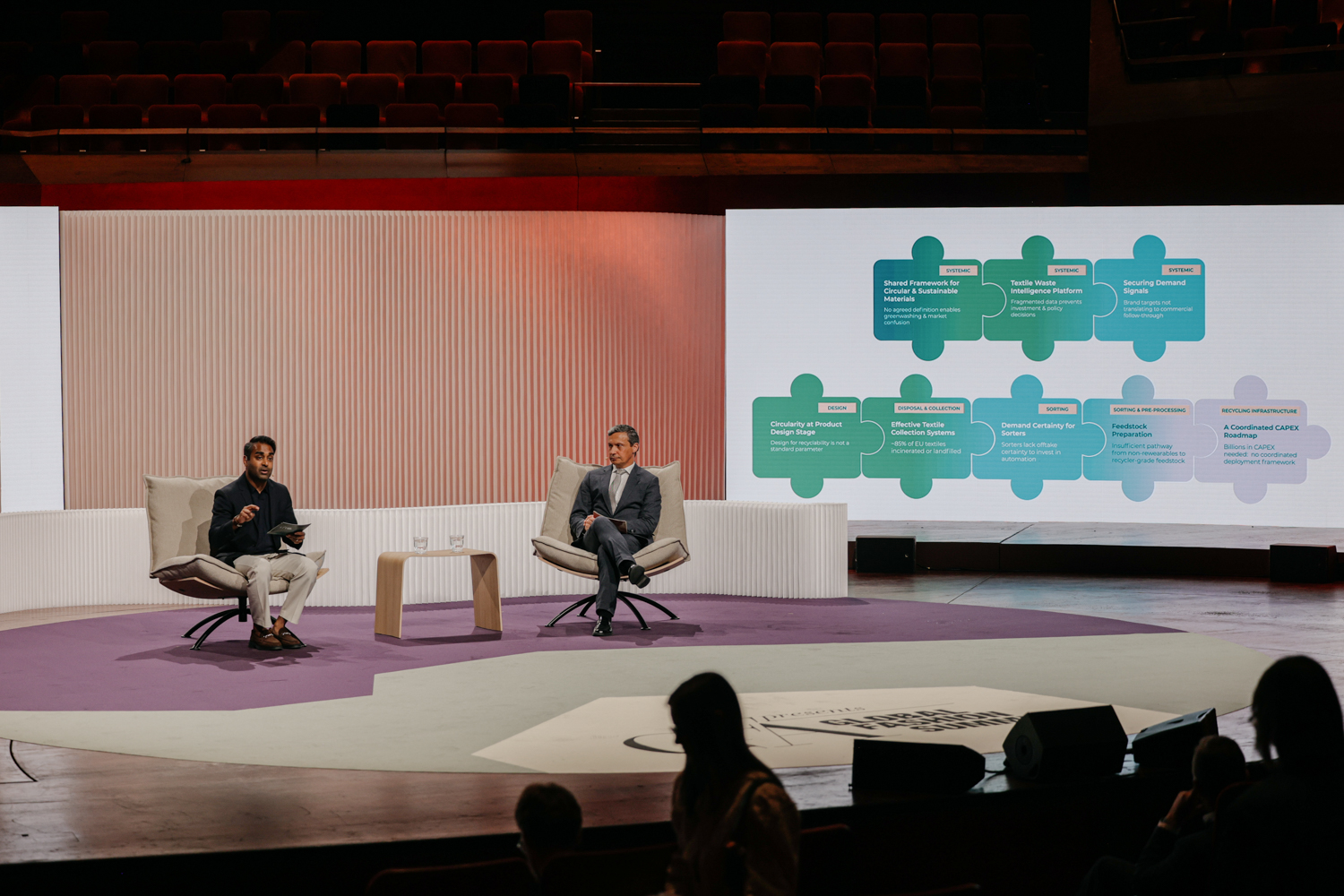
From 5-7 May, Global Fashion Summit: Copenhagen Edition 2026 convened over stakeholders from brands, retailers, NGOs, policymakers, manufacturers, innovators, and adjacent industries to advance collective action.