Meet the 2026 Next Gen Assembly

Global Fashion Agenda’s Next Gen Assembly, supported by Target and Décor, amplifies the voices of talented students and young professionals committed to driving impact across the fashion industry. We are thrilled to reveal the eight Members forming the 2026 Next Gen Assembly, a group of emerging changemakers who will participate in a year-long advocacy programme designed to nurture the next generation of fashion practitioners and leaders.
The 2026 cohort will explore the theme, ‘How can we use fashion adaptation to build resilient futures?’ Through this theme, Members will challenge the concept of adaptation and explore how it can become a transformational force across the fashion system. The Assembly will examine how different forms of adaptation can reshape system structures, power relations, and economic logic to strengthen resilience across the fashion value chains. They will also advocate for ways the industry can be transformed to nurture agency, care, community and creative experimentation.
These incredible students and young professionals will be sustained in developing advocacy and communication skills to foster their development as sustainability changemakers through a year-long programme, during which they will:
– Participate in a year-long collaborative programme with online workshops and community-building
– Co-create collective goals and advocacy strategies ahead of the Summit
– Engage meaningfully in Global Fashion Summit: Copenhagen Edition 2026
– Access industry mentorship through assigned buddies and networking with global leaders
– Develop creative outputs, including opportunities to write GFA-published articles during the programme
– Contribute to ongoing Next Gen advocacy through GFA platforms
Amongst other activities throughout the year.

Ziyander Mute is the Founder of ECOnnect Labs, a township-based circular fashion initiative addressing youth unemployment and textile waste through upcycling, skills development, and market access. With a background in Information Science, her work sits at the intersection of systems thinking, education, and creative economies. She has contributed to education curation within continental initiatives such as the AFRI (African Fashion Research Institute):New Patterns and is a Pan-African Fashion Policy Fellow, where her capstone focuses on building equitable fashion ecosystems. Ziyander’s leadership centres on designing locally rooted yet scalable models that reposition township creatives as economic contributors rather than beneficiaries. Through ECOnnect Labs, she is building practical pathways for young designers to access infrastructure, visibility, and income opportunities within circular value chains.

Silvia Acien is a regenerative knitwear designer, winner of the LVMH Green Trail Prize and the UK Jury Circular Design Challenge, People’s Choice Redress Award, and Framework Knitters Award, and founder of Acien. Raised by organic tomato farmers in Spain, Acien’s understanding and respect for local biodiversity shaped her regenerative approach. After graduating from Central Saint Martins, she launched Acien, a regenerative knitwear company working with plant-based fibres sourced from social enterprises and traditional weaving techniques from the south of Spain. Acien’s garments are biodegradable, naturally dyed, and designed to nurture the soil after decomposition, addressing water pollution, waste management, and circular systems where every living organism is valued as much as humans. The brand builds a model where fashion and farming merge to protect local ecosystems. Her work has been featured at the United Nations, UNESCO, Vogue, The Wall Street Journal, Future Fabrics Expo, Kew Gardens, and across Paris, London, Hong Kong, India, and Dutch Fashion Weeks.

Shannen-Kaylia Henry is the Founder of CocoaFiber, a biomaterials venture transforming cocoa industry agricultural waste into next-generation textile fibers. Her work focuses on building circular, climate-resilient supply chains that create new income streams for cocoa-growing communities while reducing reliance on fossil-based textiles. Through the Kaylia Group, she also founded the Sustainable Design Impact Hub and the Council on Sustainable Fashion and Design of Grenada, initiatives that convene global industry leaders, researchers, and creatives to accelerate climate innovation across fashion and materials. Henry has spoken at COP, UN General Assembly, and New York Climate Week a thought leader in Sustainable Fashion. She was named one of Causeartist’s 50 Social Entrepreneurs to Watch in 2026, is a Fashion Impact Fund and Ocean Foundation grantee, a beVisioneers Mercedes-Benz Fellow, and a Distinguished Alumna of the American University of Paris. Her work has been featured in Marie Claire Italia, Ebony, and No Kill Magazine.

Saher Bajwa is a community organizer, fashion scholar, and advocate for indigenous knowledge systems at the intersection of fashion and ecological justice. Her research spans the exploration of indigenous textiles and fashion’s role in anarchical, agrarian, and decolonial movements under an ecofeminist lens. Using this as a foundation, she went to India to work with Saheli Women and artisan communities across the country, affirming first-hand that indigenous practice holds tangible, creative responses to the climate crisis. Back in New York, Bajwa has curated community galleries, lectured at Pratt and Parsons, and founded Woven Riot, a grassroots organization cultivating fashion as a local practice of care, materiality, mutual-aid, and environmental stewardship. She plans to continue working with artisans and mobilizing more communities to see Fashion as a movement- not just an industry.

Megan Siyi Liu believes that sustainable fashion is the future of the industry. She is currently the Climate Manager at Christian Dior Couture, where she supports decarbonization initiatives and emissions monitoring across the fashion house. Previously, she was a management consultant at McKinsey & Company, advising organizations on strategy, ESG, and innovation. Liu holds an MSc in Sustainability, Enterprise, and the Environment from the University of Oxford and a B.Com from the University of Toronto. She is passionate about advancing innovations and driving behavioural shifts needed to make sustainable fashion both desirable and scalable. In her free time, she enjoys second-hand shopping, exploring art galleries, and doing yoga.

For nearly a decade, Kendall Ludwig has been a committed advocate to advancing environmental and social sustainability in the fashion industry. She received her Master's in Fashion & Apparel Studies and a graduate certificate in Sustainable Apparel Business from the University of Delaware six months after completing her Bachelor's degree. Ludwig dedicated much of her time in university to research, with a focus on circular material development from mechanically recycled textile waste. She has presented research across the U.S. to academics, industry leaders, and trade officials. Her passion for policy led her to an internship in Washington, D.C. at the American Apparel & Footwear Association, working with brands on social compliance projects and advocating for key trade policies. Now in her day-to-day work in next-life logistics, Ludwig sees firsthand the intersection of textile circularity and social responsibility. She considers it a privilege to work directly in the hands-on process of reclaiming textile waste.

Grace Isaac Iquot is an MSc Chemical Pathology candidate with a background in biochemistry, bridging the gap between public health and the fashion industry. Her research work focuses on the biochemical and toxicological implications of textile production, including chemical exposure, material safety, and environmental health in emerging economies. By bridging clinical science with fashion sustainability, Iquot advocates for evidence-based approaches to reducing textile waste, harmful chemical use, and production-related health risks. Her long-term goal is to contribute to regulatory and industry frameworks that prioritize both human health and environmental integrity within global fashion systems.

Aakanksha Rao is a circular fashion strategist and designer dedicated to driving systemic transformation within the global textile industry. Combining technical design expertise with a thoughtful, inquisitive eye, she explores complex sustainability challenges, a journey that began in 2021 as a national runner-up for her research on the topic "Can fashion ever be sustainable?". As a Gold Medallist in Fashion and Apparel Design, Rao bridges artisanal heritage and modern manufacturing. This is evidenced by her documentation of handloom traditions at the Charaka Shramajeevi Ashram in Karnataka and her industry partnership with the Nundle Woollen Mill, one of Australia’s last remaining spinning mills. Through these collaborations, she investigates regenerative resilience and the preservation of local supply chains. Currently, Rao serves as the Program Manager for the Slow Fashion Movement’s Learning Lab, using co-design and strategic advocacy to architect a circular, traceable future.
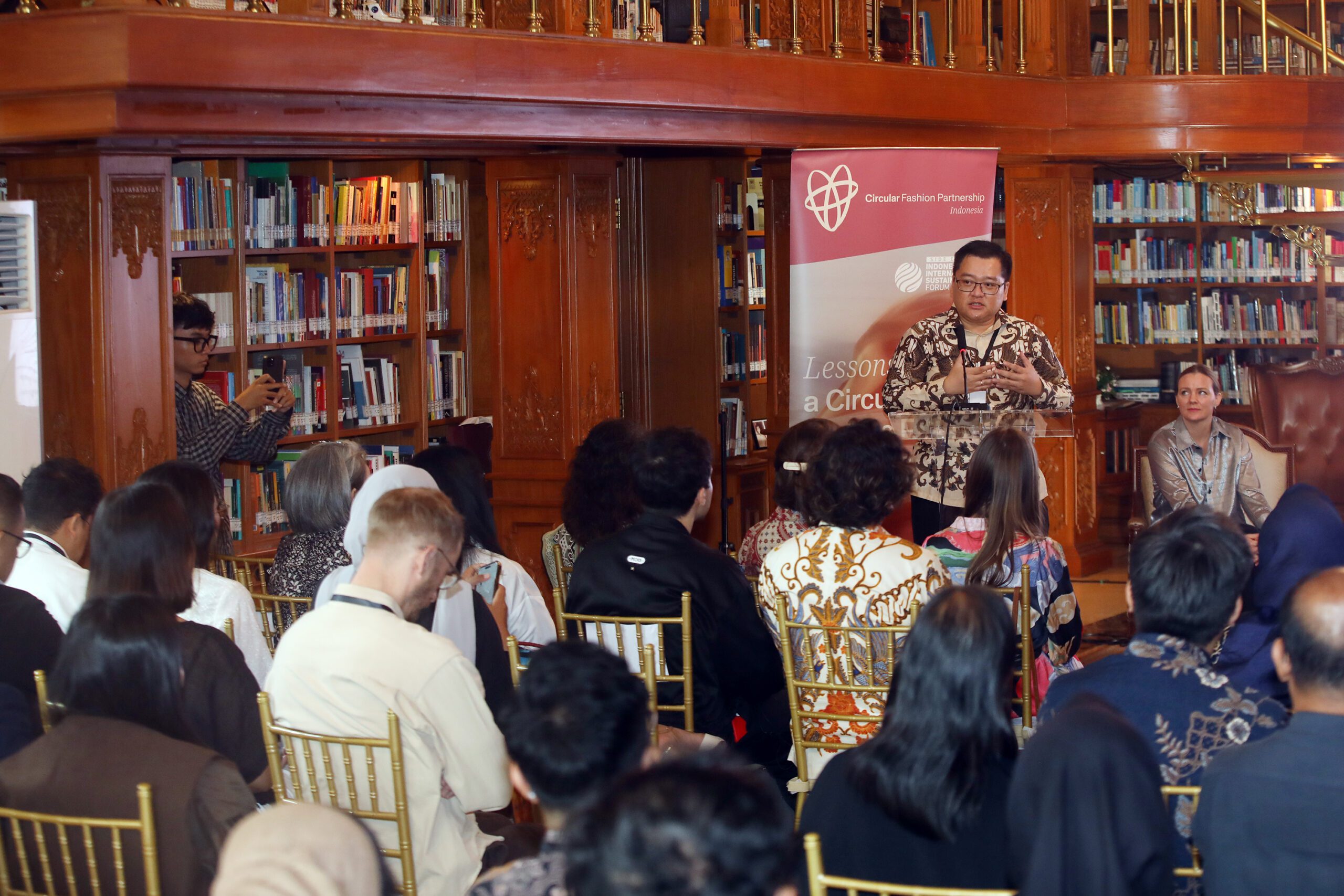
After two years of implementation across Indonesia’s textile and fashion value chain, the Circular Fashion Partnership (CFP) Indonesia brought together stakeholders to reflect on the next phase of circular textiles in Indonesia.

As we closely monitor fashion’s global legislative evolution, we zoom into GFA’s Policy Matrix: the new Asia Edition, Americas and EU editions, offering clarity and updates on emerging and existing legislation.
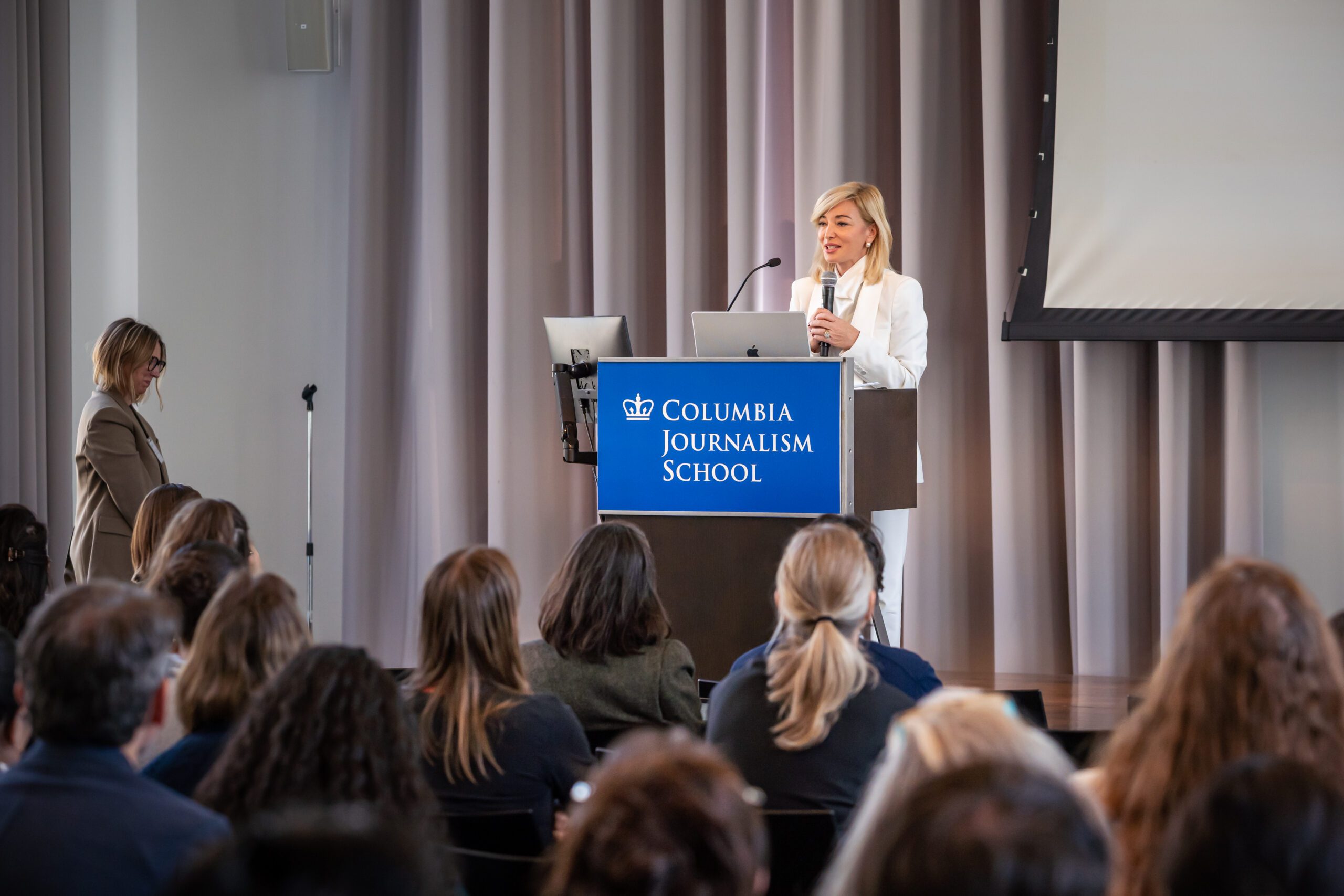
With over 100,000 attendees and 1,000 events taking place across New York City, Climate Week NYC 2026 convened industry leaders, policymakers, decision-makers, and civil society representatives from across the globe to accelerate climate action.