Reflecting on Climate Week NYC 2026: Accelerating Fashion’s Transformation
With over 100,000 attendees and 1,000 events taking place across New York City, Climate Week NYC 2026 convened industry leaders, policymakers, senior decision-makers, and civil society representatives from across the globe to accelerate climate action. The urgency for action was underscored by the recent release of the Planetary Health Check 2026, which revealed that seven of Earth’s nine planetary boundaries have been breached and continue to worsen. Against this backdrop, the week provided an opportunity to strengthen cross-sector partnerships and exchange unique perspectives, sparking high-impact discussions on critical sustainability topics and building momentum for collective progress.
For Global Fashion Agenda (GFA), the week served as a platform to convene key stakeholders through a focused programme of events, roundtables, and conversations exploring key priorities shaping fashion’s sustainability transformation. Through discussions spanning circularity, innovation, policy, and collaboration, GFA created space for open exchange between diverse voices and identified opportunities to translate shared ambition into meaningful industry action.
As businesses and policymakers explore ways to reduce global waste and resource pressure, a circular approach to production and consumption is critical. Climate Week NYC 2026 underscored the growing importance of circularity within the sustainability agenda, with discussions on the circular economy, resource efficiency, and climate impact taking place across the week.
Reflecting a global momentum towards circular policy, 2026 marked significant legislative advances—from the EU’s expected overarching Circular Economy Act establishing a single market for secondary raw materials, to the introduction of the Textile Waste Reduction Act in the US creating its first coordinated national framework targeting textile waste. Together, these developments signal a pivotal shift toward policy-driven resource efficiency.
Circularity was a central focus of GFA’s Climate Week initiatives. During the GFA Assembly at Nike NYHQ, GFA hosted a leadership roundtable bringing together multi-stakeholder organisations to drive actionable next steps for the recently launched 2030 Circularity Blueprint..
Meanwhile, a roundtable hosted in collaboration with Deloitte addressed how the Fashion Impact Toolkit can support strategic decision-making by helping organisations prioritise interventions across the value chain and identify where circular approaches could deliver the greatest sustainability and business value.
Circularity was further considered within the broader conversation around sustainability and finance. Sustainability increasingly carries direct financial implications: from carbon pricing to extreme weather and workforce risks. Extended Producer Responsibility (EPR) provides a timely lens for this focus, offering a tangible example of how sustainability is increasingly becoming a strategic, operational and financial consideration that requires cross-team collaboration.
At Climate Week, GFA built on the publication of the Fashion CFO Agenda, and conversations initiated at Global Fashion Summit in May, by hosting a Finance Circle roundtable, in collaboration with BCG. The session brought together finance and sustainability leaders together to explore where structural gaps and capability immaturities persist, how organisations are approaching financially material sustainability issues and what are the trigger factors that push these issues on the executive agendas.
Innovation emerged as a recurring theme throughout Climate Week NYC 2026, highlighting its essential role in addressing environmental challenges and accelerating the development and adoption of more sustainable solutions. Several initiatives aiming to reduce climate impact were announced across the week, such as Levi Strauss & Co and Marks & Spencer’s Fashion Renewable Collaborative that works to accelerate renewable electricity adoption and further decarbonisation across global fashion supply chains. A new plant-based, low-carbon denim collection was also showcased during the week, using lower-impact manufacturing and finishing techniques designed to reduce water, energy, and emissions.
GFA, Fashion For Good, and PDS Ventures, in collaboration with GFA’s Strategic Partner Ralph Lauren, placed a spotlight on innovation during the week with Innovation Day, featuring a series of short pitch sessions followed by an interactive Innovation Gallery. The day brought brands, industry financiers, and solution providers together to connect and explore emerging opportunities to scale innovation across the fashion industry.
Global leaders at Climate Week NYC 2026 emphasised the importance of policy as a critical driver of climate action, shaping the frameworks, incentives, and conditions needed to turn ambition into progress across sectors. Against a backdrop of significant regulatory implementation in the fashion industry, such as the EU ban on destruction of unsold clothes and shoes and the anti-greenwashing Empowering Consumers for the Green Transition Directive that works to protect consumers from misleading environmental and sustainability claims, the week fostered discussions on navigating an evolving regulatory landscape and driving effective climate action through policy.
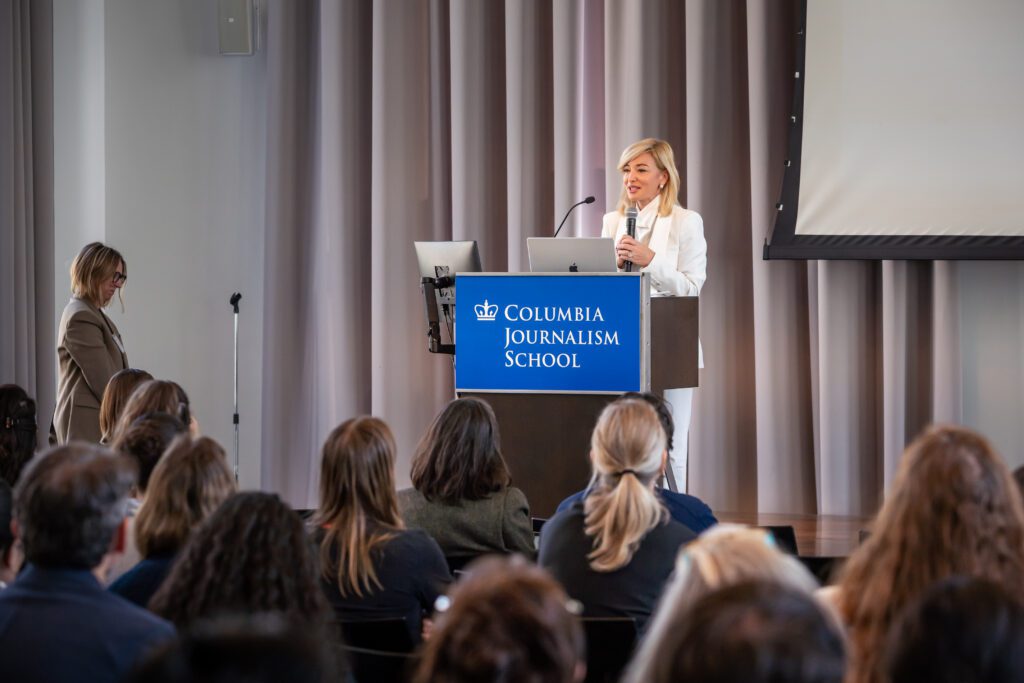
During the annual GFA Policy Masterclass at Climate Week NYC 2026, hosted in collaboration with Columbia University, industry leaders and policy experts explored how brands can build long-term supply chain resilience amidst a changing political environment. Opening with remarks from Federica Marchionni, CEO of Global Fashion Agenda, the masterclass featured a presentation by María Luisa Martínez Díez, GFA’s VP of Public Affairs, before moving to a panel discussion featuring leading experts from H&M Group, TerraCycle, Ceres and Columbia University.
The scale and complexity of the climate transition requires meaningful collaboration between sectors. Climate Week NYC 2026 brought together industry leaders, political change makers, and local advocates to align priorities and forge long-term partnerships.
Global Fashion Agenda facilitated a range of events to further cross-sector collaboration. The Fashion Leaders Dinner, co-hosted with Belvedere Vodka, brought together senior leaders from across the fashion ecosystem to exchange perspectives on the challenges and opportunities shaping the industry’s sustainability transition. GFA also convened sustainable fashion stakeholders during a Fireside Chat between Federica Marchionni, CEO, GFA and Sally Qiu, Co-director of the Fashion, Energy, and Climate Network and Senior Research Associate at the Center on Global Energy Policy, on the evolution of fashion’s transition, the opportunities ahead for industry collaboration, innovation, and progress. Later in the week, the GFA Power Walk blended movement, nature, and connection.
Across Climate Week NYC 2026, discussions on circularity, innovation, policy, and collaboration highlighted the importance of connecting ambition with implementation. As the fashion industry continues to navigate a rapidly changing landscape, progress will depend on translating shared priorities into practical action.
GFA extends gratitude to its partners, speakers, participants, and collaborators for their contributions at Climate Week NYC 2026.

As key levers of the circular economy and catalysts of much-needed system change in the fashion industry, it’s easy to assume an element of built-in future-proofing for solutions such as repair, recycling, and resale.
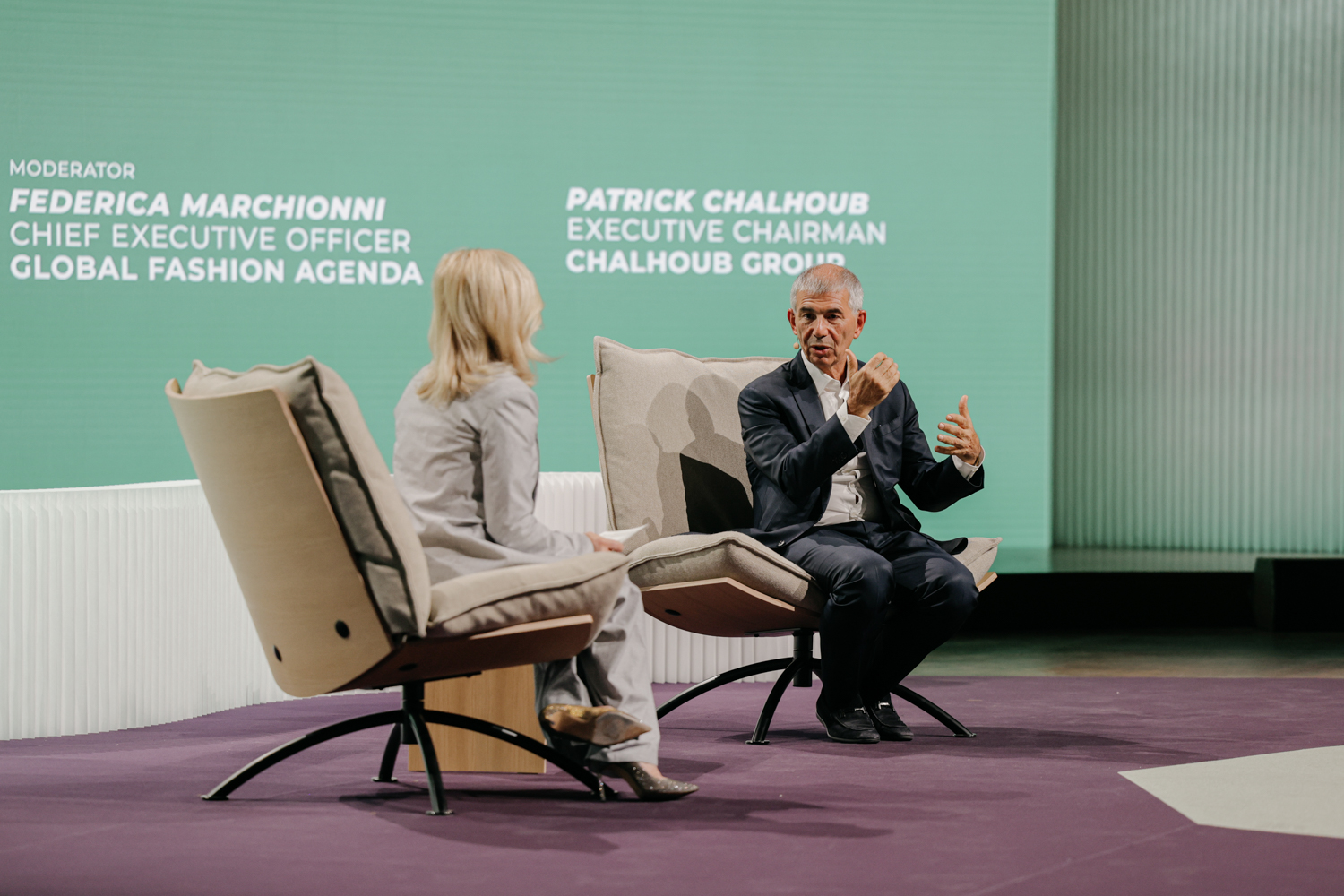
Global Fashion Agenda (GFA) and Chalhoub Group are collaborating to accelerate impact across the fashion value chain.

Fashion companies have spent years improving what happens within their own operations.