Biodiversity and Climate COPs Explained: What the Outcomes Mean for Fashion

In the space of a month, the world’s governments met twice to take stock of the planet’s health. First, for nature at the UN Biodiversity Conference (CBD COP17) in Yerevan, Armenia, and then for climate at the UN Climate Change Conference (COP31) in Antalya, Türkiye. Both were billed as conferences of implementation, and yet COP17 closed with a modest roadmap for nature while COP31 ended without a major new deal. It would be tempting to reach for the ‘cop out’ headline, but the picture is more nuanced. Both exposed the same tension that ran through Belém last year: the science is clearer than ever and the solutions are increasingly available, but the political will to fund and enforce them is still not keeping pace.
For fashion, whose value chain spans farms, forests, and some of the world’s most climate vulnerable manufacturing hubs, the two COPs are best read together and climate and biodiversity are not separate agendas for this industry.
Yerevan marked the halfway point of the Kunming-Montreal Global Biodiversity Framework (KMGBF), the 2022 agreement to halt and reverse nature loss by 2030. Its centrepiece was the first global review of how far countries have come, and the verdict was sobering – the review warns with “deep concern” that the 2030 goals will not be met without faster action.
Countries answered it with the Yerevan Pathway, a plan for speeding up delivery. Governments also agreed how a new permanent body will work, giving Indigenous Peoples and local communities a formal seat in shaping biodiversity policy which builds on the clear message from Indigenous leaders at COP30.
Finance, however, remained the sticking point. High-income countries missed their target of providing at least $20 billion a year for nature by 2025, and a permanent post-2030 financial mechanism was agreed only in principle, with its form deferred to COP18 in 2028. Around $1.8 billion in new pledges were announced during the high-level segment.
Few issues drew more attention in Yerevan, inside and outside the negotiating rooms, than subsidies that harm nature. They are estimated at up to $1.8 trillion a year, and the KMGBF aims to cut them by at least $500 billion a year by 2030. However, 84% of countries missed the 2025 deadline to identify them, and the final text only “encourages” faster action.
Fashion’s reliance on materials such as cotton, leather, wool, natural rubber, and man-made cellulosic fibres (MMCFs) means that land use is crucial to its footprint. Many agricultural subsidies shape how these materials are grown and as biodiversity targets move from pledges to national plans, brands should expect nature to feature more prominently in regulation, investor expectations, and disclosure. Mapping where materials come from, and what that means for ecosystems and the people who depend on them is fast becoming a baseline rather than a differentiator.
Three weeks later, COP31 opened in Antalya against a stark backdrop. The UN Environment Programme’s latest Emissions Gap Report warned that even if every national climate plan is delivered in full, the world is heading for about 2.6°C of warming by 2100, and that 1.5°C can no longer be held without a period of overshoot.
The COP31 presidency, held by Türkiye with Australia leading the negotiations, framed the summit around implementation, with electrification and circularity among its headline priorities. Its “35 by 35” goal would raise electricity’s share of final energy consumption from around 23% today to 35% by 2035. On circularity, the presidency set two targets for 2035: to reduce projected growth in municipal waste by at least 50%, and to increase the global circular material use rate to at least 15%. For fashion, these are among the most relevant points, and they sit squarely alongside the industry’s work on textile circularity and Extended Producer Responsibility (EPR). Textile panels, such as WRAP’s session, ‘Textiles: The Future of Fashion and the Waste We Export’, were among fashion’s most visible moments in Antalya.
Crucially, no major new deal emerged from the conference. Scheduled to close on Friday, the talks stretched into Sunday – a record for a UN climate conference – and became the first COP since Copenhagen in 2009 to end without its main political agreement. The EU, Pacific island states, and other parties refused to back a final text that left out the words ‘fossil fuels’, pointing only obliquely to the COP28 commitment to move away from them. Lower-income countries were equally frustrated on finance: the tripling of adaptation finance agreed in Belém came with no numbers or baseline attached. UN Secretary-General António Guterres said he was “deeply disappointed”.
Not everything was lost, as a separate decision set out a phased plan for the just transition mechanism, designed to protect workers and communities through the move to clean energy, though what it will do and how it will work won’t be agreed until COP32. The presidency also reported that over 80 countries had signed up to the “35 by 35” electrification goal. It was also the first COP to formally discuss missing the 1.5°C goal, though the written acknowledgement was lost with the draft agreement. Looking ahead, UN climate chief Simon Stiell plans to take advice on how the consensus-based process could be reformed before COP32 in Ethiopia in November 2027. In the meantime, the question of who pays for adaptation and the energy transition in lower-income countries, home to many of fashion’s manufacturing hubs, stays open for another year.
Some of the most tangible news for fashion came from finance. Inditex, the International Finance Corporation (IFC), and Social Investment Managers & Advisors (SIMA Funds) used COP31 to announce D-TAFS, a supplier decarbonisation fund that aims to raise up to $400 million. IFC (up to $60 million), the Dutch development bank FMO ($50 million), and Inditex ($50 million) are the largest investors so far, joined by the Apparel Impact Institute (Aii), British International Investment, and the Global Environment Facility, among others. H&M Group, meanwhile, added its name to a We Mean Business Coalition statement, signed by more than 180 companies, urging governments to speed up electrification.
Fashion’s presence on the ground in Antalya was smaller than at previous COPs. While this warrants an honest look, it does not mean the industry has stopped working on climate. As Vogue Business reported, tighter ESG budgets and a growing calendar of industry-specific forums have changed where much of the practical work takes place.
This year, other forums enabled substantive collaboration. At Global Fashion Summit: Copenhagen Edition 2026, more than 1,000 stakeholders from brands, manufacturers, policymakers, innovators, and civil society gathered under the theme ‘Building Resilient Futures’. Fourteen Leadership Roundtables tackled the very issues on the COP31 agenda, including Climate Adaptation in Luxury Value Chains, The Bangladesh Accelerator: Strengthening Reporting for EU Regulations, and The GFA Circularity Blueprint Project. At Climate Week NYC 2026, Global Fashion Agenda hosted a GFA Assembly addressing circularity, industry impact, and financing, alongside a Policy Masterclass, exploring how companies can build supply chains that withstand regulatory and political change, as part of the Columbia Fashion, Energy, and Climate Summit.
Taken together, Yerevan and Antalya send five clear signals to the industry:
Closing the gap between what is promised and what is delivered remains the challenge of this decade, and Antalya made it wider. When the multilateral process stalls, national and regional legislation becomes the real lever. GFA will continue to support policymakers and industry in shaping regulation that moves fashion forward. The tools to close that gap are increasingly in place: new finance vehicles, clearer policy direction on electrification and circularity, and an industry that knows where its biggest levers lie.
On 17 November 2026, at Mumbai's Jio World Convention Centre, The Earthshot Prize announced its five 2026 Winners, each receiving £1 million to scale environmental solutions and accelerate global action.
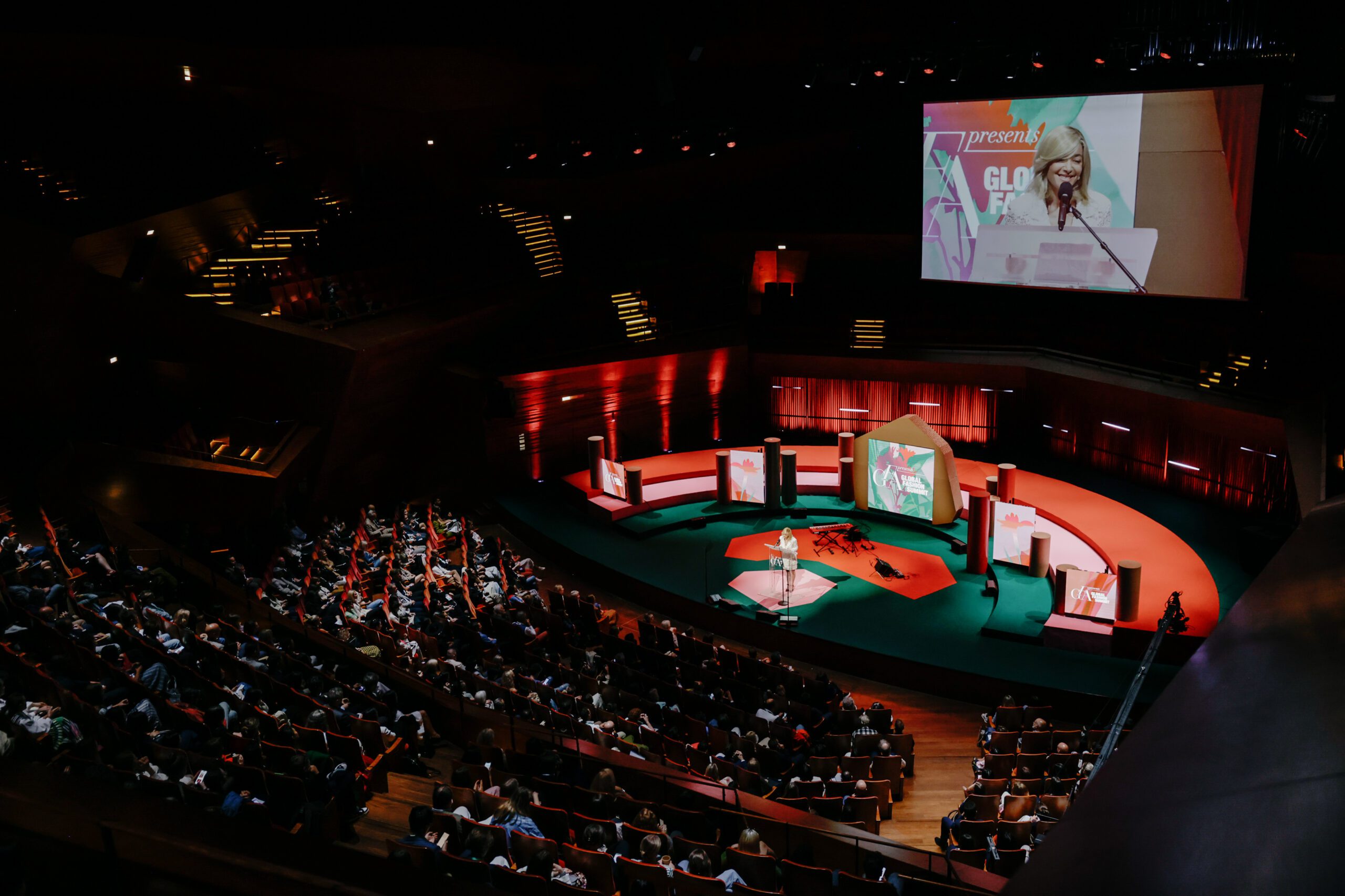
Global Fashion Agenda has revealed the theme for Global Fashion Summit: Copenhagen Edition 2027: ‘The New Fashion System: Business, but not as usual’.

Global Fashion Agenda (GFA) and PDS Ventures are delighted to announce the opening of applications for the Trailblazer Programme 2027.
